
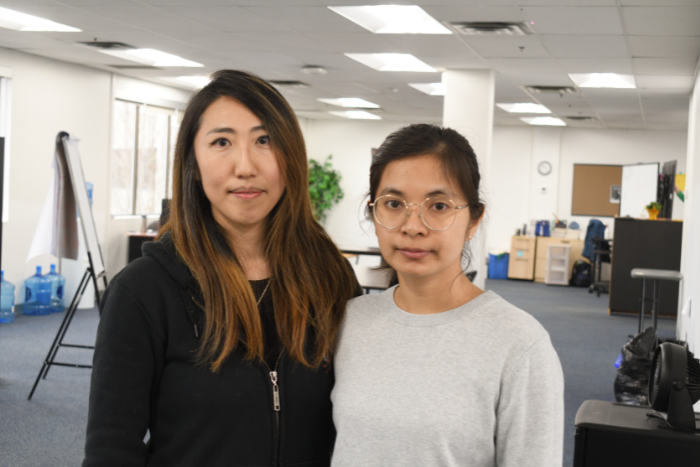
LINC Level CLB 5/6 Class.
“Many of my classmates want to become healthcare assistants. With the cuts, they have nowhere to go. They don’t know what to do next.”
“I didn’t know the language, the history, the culture, or even how people live in Canada. Everything I know now, I learned in these classes.”
These are just a fraction of the students that have been impacted by Immigration Refugees and Citizenship Canada’s decision to cut funding to higher-level English classes for newcomers.
For more than three decades, Language Instruction for Newcomers to Canada (LINC) has been a cornerstone of settlement across the country – helping newcomers build the language, confidence, and cultural understanding needed to begin their lives in Canada. Sweeping federal funding cuts have dismantled a critical portion of that system, leaving students, educators, and communities like Abbotsford facing an uncertain future.
The Archway LINC program not only teaches English to newcomers in Canada but also gives them the opportunity to learn about Canadian housing, employment, healthcare, education, and how to navigate community services through virtual and in-person group classes.
At Archway, the impact of the cuts is immediate and profound.
Since April 2026, LINC programming is only offered at CLB Level 4 and below, known as Stage 1. Everything beyond, which includes CLB Levels 5 to 8, known as Stage 2, has been eliminated due to funding cuts.
At CLB Level 4, learners can navigate basic daily life, but their English is not strong enough for most employment, training programs, or higher education, leaving them stuck between survival and opportunity.
“Stage 2 – CLB 5 to 8 – is critical for learners to develop workplace communication, cultural navigation skills, and the confidence they need to contribute economically,” said Paula Mannington, associate director of language services, learning and development at Archway.
Did You Know?
A Bridge That’s Been Removed
At CLB 4, learners can manage everyday tasks – visiting a doctor, going to the bank – but that’s where progress has now stopped.
“A person at CLB 4 can get by in daily life – but only survive,” Paula explained. “Opportunities like better jobs, trades training, or post-secondary education don’t open until around CLB 5 to 8.”
Across Canada, funding for all Stage 2 LINC classes has been cut, impacting thousands of learners across Canada.
Impact Felt by Students
Sokheng, a learner from Cambodia, describes LINC as the first place she truly felt she belonged.
“In LINC, I finally found a place where I could share my story and listen to others,” Sokheng said. “It feels like something important is missing in my life now.”
“Right now, I don’t feel confident enough to work. My English is not strong. Without LINC, I feel like I’m in the middle of the ocean and I’m not sure where to go.”
Mikako, from Japan, echoes that sense of disconnection.
“Through LINC, I found a community,” Mikako said. “The funding cuts have shut down many doors. I don’t know how I will keep the connections I built.”
For Saber, who arrived from Afghanistan, the program represented a pathway to his future career.
“My dream is to become an IT specialist, but that needs high-level English,” said Saber.
For Savvoeuy, who has been in Canada for about a year, LINC was the turning point.
“When I first came here, I was afraid to go outside alone,” Savvoeuy said. “After just three months in LINC, everything changed and now I have more confidence to go out.”
But now, just as she approached the level needed to pursue her career goals, that progress is at risk.
“I have two dream jobs – healthcare assistant and education assistant – but I need CLB 7. I was in CLB 6, but I cannot continue since the cuts and I cannot afford an English course.”
Impact on the Community
“When immigrants reach CLB 8 and beyond, they can work in high-demand fields, retrain, and contribute more to Canada’s economy. By cutting the classes that help them reach that level, we risk leaving more people stuck in the gaps with long‑term impacts we don’t yet fully understand,” said Paula.
Abbotsford, which now serves a growing number of government-assisted refugees, has only one LINC provider. Waitlists remain long, especially as programming shrinks.
“In 2024, we had expanded programming to meet the boom in immigration levels in Canada,” said Paula. “Then suddenly, the cuts hit. It has been incredibly destabilizing for staff and students.”
Highly trained instructors – many with advanced degrees and years of experience – are also being displaced.
“Some of our Stage 2 teachers have master’s degrees,” Paula said. “They’ve spent years building these programs, mentoring hundreds of learners and now they’re facing job losses.”
Online Learning Cannot Replicate the Classroom Experience
What students describe most often is not just what they learned – but how they learned it.
LINC classrooms are spaces where newcomers build relationships, share experiences, and learn how Canada works together – all for free.
Without the higher-level classes, some students have turned to online applications to facilitate their language learning, but these language apps are not a replacement for the program. “You can’t replicate community integration on an app,” Paula said.
“Our students learn about the Canadian health and education systems. They engage with guest speakers and go on field trips. None of that exists in an app.” That sense of belonging is especially important for those who arrive in Canada after experiencing displacement, trauma, or interrupted education.
“About 55% of our learners are resettled refugees, so they may not have even had the opportunity to finish high school or post-secondary because it was interrupted by war and displacement,” Paula explained.
“Many have been through unimaginable experiences and cannot afford private language training.” Many students are not sure what comes next for their education and future.
“There are very few formal alternatives,” Paula said. “Most of what remains is self-directed learning, but that’s not realistic for newcomers with limited digital skills.”
A Continuing Struggle to Find a Path to Employment
At its core, the loss of Stage 2 LINC classes is the loss of possibility.
Although the Archway LINC program will continue to offer CLB Levels 4 and below, that is not enough for newcomers to build a future in Canada.
“Our Stage 2 learners are often parents, refugees, and newcomers, so they are managing several settlement barriers already. The lack of alternative pathways just intensifies the loss that they’re feeling and creates a massive barrier to their future,” said Paula.
Students feel that loss acutely.
“LINC was helping me so much. It was my hope,” Savvoeuy said.
Another LINC student reflects on what’s at stake – not just for individuals, but for the country as a whole.
“If newcomers can learn English, they can work, support their families, and support Canada,” Sokheng said. “But if they cannot learn, they will always need support.”