
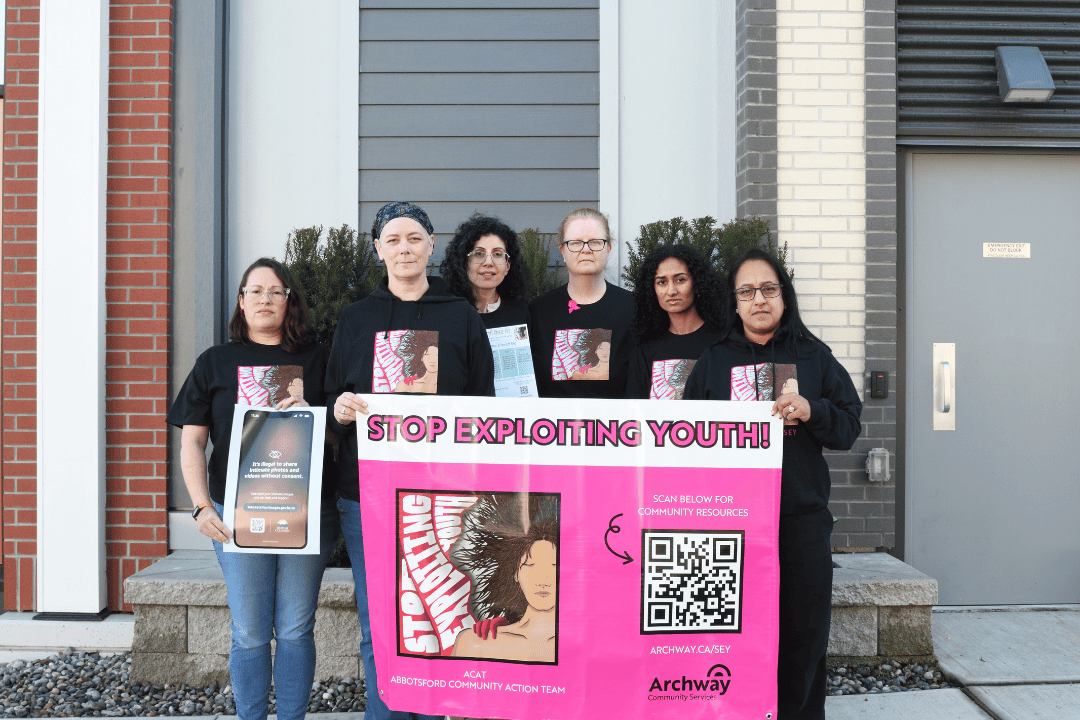
As digital platforms and artificial intelligence (AI) tools continue to evolve at a rapid pace, youth are being confronted with new tactics designed to manipulate and sexually exploit them online.
This sexual exploitation awareness week, the Abbotsford Community Action Team (ACAT) is expanding its efforts to inform, educate, and protect youth by bringing vital prevention programming into local high schools and engaging the broader community in conversations about safety and support.
The ACAT is made up of service providers and community partners who work together to raise awareness of and develop local strategies that address sexual exploitation. The ACAT includes representatives from Archway Community Services from programs including the Abbotsford Addictions Centre, Foundry Abbotsford, and the Youth Resource Centre along with representatives from the Abbotsford Youth Commission.
“It’s essential that young people understand the risks they face online and feel empowered to seek help when something doesn’t feel right,” said Mandy Aujla, youth worker in the Archway Stop Exploiting Youth (SEY) program.
“Our partners across Abbotsford are working together to ensure students receive the guidance and support they need.”
The local campaign aligns with B.C.’s provincially recognized Stop the Sexual Exploitation of Children and Youth Awareness Week, held this year from March 9 – 15. Now in its 28th year, the week highlights the need for coordinated community action in prevention, education, enforcement, and intervention.
Throughout the week, ACAT sets up displays across the community. Posters, informational materials, and online resources aimed at educating students, caregivers, and community members are placed in schools within the Abbotsford School District, as well as in libraries, coffee shops, and other public spaces. These resources help raise awareness and provide students with the tools they need to seek support, while also informing caregivers and teachers about how to recognize concerns and access help. If you are interested in having a display, please contact Mandy Aujla at 604-556-4619.
“It’s essential that young people understand the risks they face online and feel empowered to seek help when something doesn’t feel right. Our partners across Abbotsford are working together to ensure students receive the guidance and support they need.”
Bringing Awareness to the Punjabi Community
As one of Abbotsford’s largest cultural communities, ACAT has translated key educational materials into Punjabi to ensure families can access clear and culturally relevant information.
“Sexual exploitation is increasingly affecting members of the Punjabi community and often goes underreported. International students arriving from India looking to build a future in Canada are particularly vulnerable since many face significant financial pressures and the urgent need to secure permanent residency,” said Aujla.
To further strengthen outreach, the team is engaging directly with the Punjabi community by placing informational posters within local gurdwaras to reduce stigma, increase awareness of online risks, and create safer, more accessible pathways for youth to seek help.
Rise of AI Related Threats
A rapidly emerging concern is the use of AI to generate harmful and inappropriate content used to exploit youth. Free online tools have made this technology widely accessible, increasing the risks faced by young people.
According to the Canadian Centre for Child Protection, youth reported 527 cases of Non-Consensual Distribution of Intimate Images (NCDII) through Cybertip.ca in 2025, 19 of which involved the use of AI – nearly triple the amount reported in 2024.
Earlier this year, UNICEF also issued a warning that generative AI, technology that can create entirely new content such as images, videos, text, or audio, is creating new forms of exploitation. They emphasized the need for ongoing training and resources for parents, educators, mental health workers, and law enforcement.
Resources and Supports Available
“When young people come forward after experiencing exploitation, many carry fear, confusion, and misplaced shame. Our message to them is that this is not their fault. Exploitation can happen to anyone, and there are trusted, caring adults ready to support them through it,” said Wanda Phillips, supervisor at the Archway Youth Resource Centre.
More information on the supports and resources available through the Archway Youth Resource Centre can be found at Archway.ca/SEY
Students and caregivers can also report incidents of online sexual exploitation through Cybertip.ca, Canada’s national tipline for reporting online child exploitation.
“When young people come forward after experiencing exploitation, many carry fear, confusion, and misplaced shame. Our message to them is that this is not their fault. Exploitation can happen to anyone, and there are trusted, caring adults ready to support them through it.”